The Life of a Saint
Biography
The story of Hazrat Syed Inayat Ali Shah Zia Jaffry (R.A.) — from his birth near Campbellpur and his years in the police, to his turn toward the Sufi path, his celebrated life of letters in Peshawar, and the Darbar-e-Alia Qaderia Ziaeya he left behind. Drawn from his published biography, which you can read in full online.
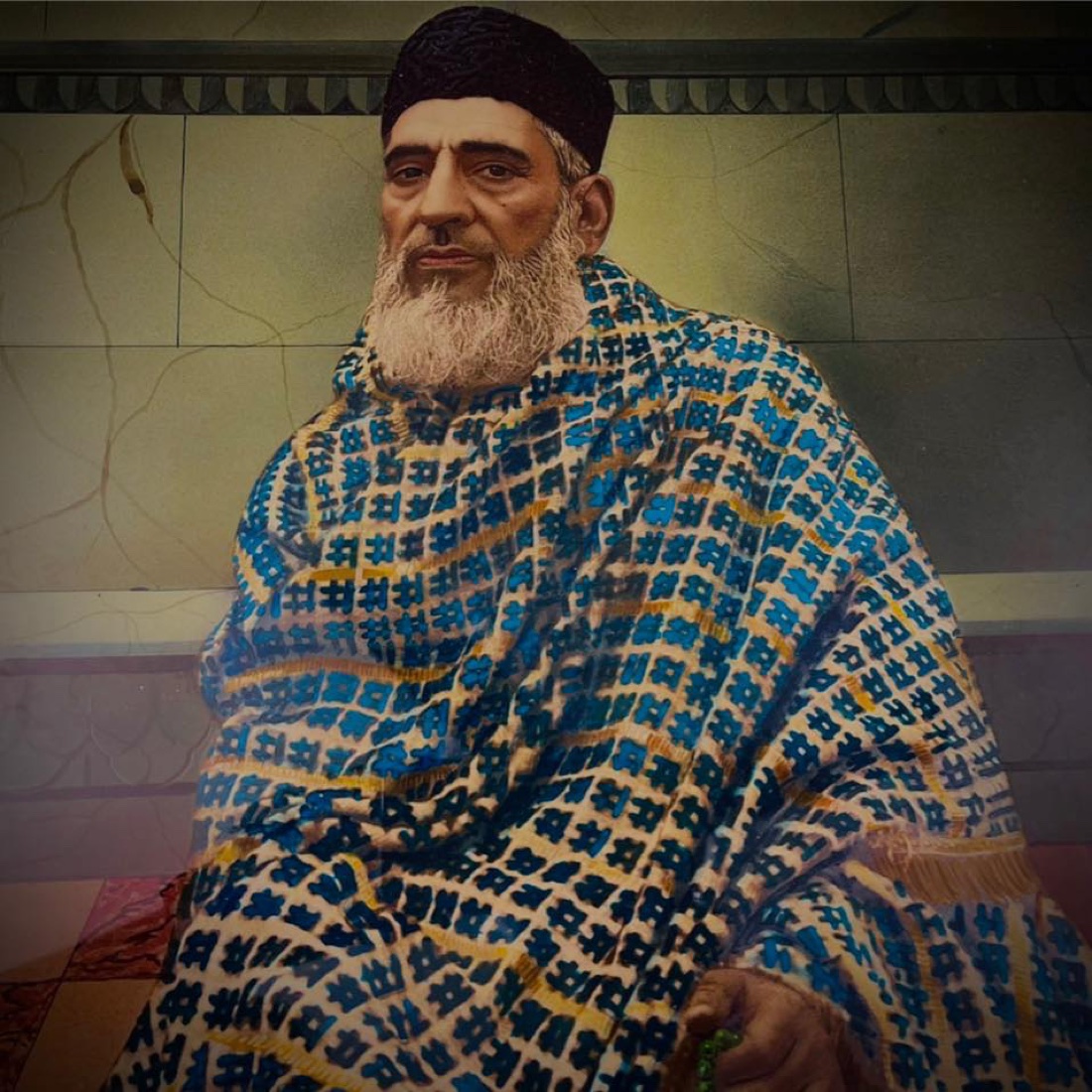
رحمة الله عليه
Also known as Agha Syed Inayat Ali Shah · Zia Jaffry
At a glance
A few sure things
Drawn from his published biography, “Sawaan-e-Hayat o Tadween-e-Kalaam”, compiled by his granddaughter Syeda Ume Laila Jaffry. You can read the book online.
Jatli, District Campbellpur (now Attock)
“Zia” ضیاء
Qadri · Fadli · Chishti · Niazi · Nizami
Hazrat Sain Rehmatullah Qadri Fazli
“Khayyam-e-Sarhad” · “Tahir Lahooti”
16 Rabi al-Awwal 1393 AH (23 May 1973), Peshawar
Darbar-e-Alia Qaderia Ziaeya, Sheikhabad
On his date of birth: the sources differ. Farigh Bukhari records 4 January 1905 at Jatli, while Zia Jaffry himself once gave 5 January 1910. His biography notes the discrepancy; we present both rather than settle it.
His life, in order
The path he walked
A conservative telling, faithful to what the Darbar has shared — where the record is silent, it is left plainly marked as such.
Birth & lineage
Born at Jatli, District Campbellpur
Hazrat Syed Inayat Ali Shah — who would take the pen-name “Zia” ضیاء — was born at Jatli, in District Campbellpur (today’s Attock), around 1905–1910. His father, Syed Mir Murtaza Shah, served as a Police Inspector. The family’s nisba, Jaffry, marks their descent from Imam Ja’far as-Sadiq (a.s.); their forebears are remembered as having journeyed from the House of the Prophet ﷺ through Shiraz and Kabul into the region.
The turning
From the police to the path
As a young man — around 1925, still in his school years — he entered the Police and served as a head constable. But the pull of the divine proved stronger than any career. At the hand of his guide, Hazrat Sain Rehmatullah Qadri Fazli, he entered the Sufi path, and in time laid down the yoke of the service to devote himself wholly to God — while his one-time colleagues rose to the rank of DIG. It is from this guide that his silsila carries the name Fazli alongside the Qadri.
A life of letters
Poet, editor, and patron of literature
In Peshawar, Hazrat Zia Jaffry became a central figure of Urdu letters. He worked in journalism — editing papers including Angar, Islah-e-Sarhad, Shura, Sharar and Tameer-e-Nau — kept a calligrapher’s hand, and from around 1950 was associated with Radio Pakistan, Peshawar. He led the literary assembly Bazm-e-Sukhan, and in 1934 founded the celebrated circle Dairah-e-Adabiya with his friend Abdul Wadud Qamar — a “training ground for poets” from which a generation who needed no introduction emerged: Ahmad Faraz, Khatir Ghaznavi, Mohsin Ehsan, Farigh Bukhari, Raza Hamdani, Amir Hamza Khan Shinwari and more, who counted themselves his pupils. Farigh Bukhari honoured him with the name “Tahir Lahooti”.
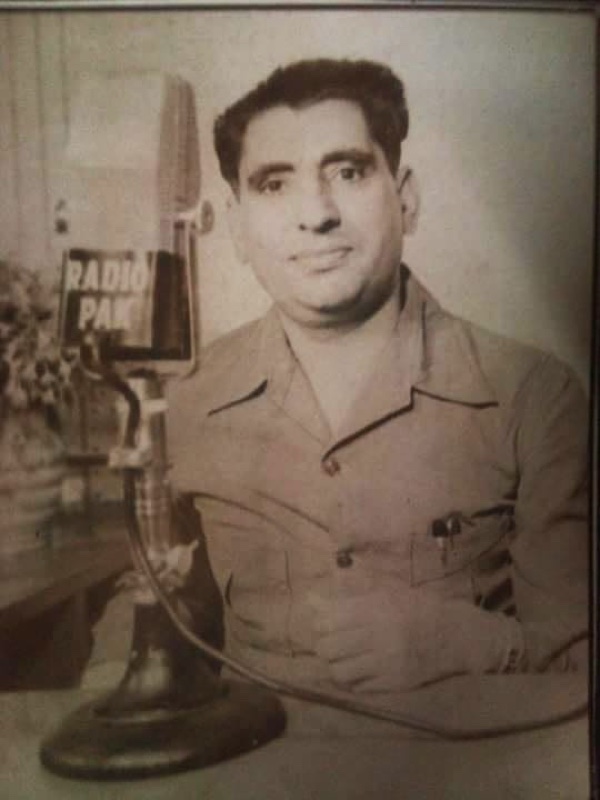
The poet
“Khayyam of the Frontier”
His mother tongue was Persian, yet he was captivated by the charm of Urdu, leaving lasting verse in both. His Persian collection bears the title “Chapan Chapan” چپن چپن, and his Urdu diwan is simply “Sufi” صوفی — ghazals, ruba’iyat and qata’at brimming with divine love. For the mastery of his ruba’i, critics named him “Khayyam-e-Sarhad”, the Omar Khayyam of the Frontier.
The path & the Darbar
The Darbar-e-Alia Qaderia Ziaeya
His way drew together the great streams of Sufism — the Qadiriyya (with its Fazli branch), the Chishtiyya, and its Niazi and Nizami lines. At Sheikhabad in Peshawar he established the khanqah and Darbar that carries his name: a place of prayer, remembrance, and open-handed hospitality, where each year the Urs Mubarak gathers the lovers of the Darbar.
1953 onward
Healer of the poor
From 1953 he took up hikmat (herbal medicine) as a way to serve the sick, running a clinic from his home. Believing most bodily ailments were rooted in spiritual disorder, he joined spiritual healing to medicine — treating the poor and distributing medicine free of charge, rising at midnight for those who suffered. His clinic became a salon too, where poets, dervishes and seekers gathered.
Wisal · 16 Rabi al-Awwal 1393 AH
His passing — 23 May 1973
On the night of 16 Rabi al-Awwal 1393 AH (23 May 1973), around nine o’clock, Hazrat Zia Jaffry (R.A.) attained his Wisal — his return and union with his Lord — hence he is always named with Rehmatullah Alayh. It is this date, 16 Rabi al-Awwal, that the Darbar keeps each year as his Urs. His funeral, per his will, was led by Maulana Syed Gul Amir Shah Naqshbandi, who cried out, “you have made me lead the funeral prayer of a living man”; the whole of Peshawar closed its shops and hundreds of thousands walked in the procession. On the sorrow of his passing, Ahmad Faraz mourned him in a nazm, “Yaad-e-Yaar-e-Mehrban.”
Legacy
A living legacy
The path did not close with his passing. The present Sajjada Nasheen, Syed Zain-ul-Abidin Jaffry Al-Qadri Chishti Niazi Nizami, continues the Darbar’s work; his granddaughter Syeda Ume Laila Jaffry gathered his life and verse into the book “Sawaan-e-Hayat o Tadween-e-Kalaam” (launched at the Urs of 2024); and the commemorative circle Majlis-e-Yadgar-e-Zia keeps his memory alive.
Continue the journey
Follow the thread further
The story does not end with a life — it lives on in a teaching, a couplet, a lineage, and a living custodian.
His Teachings
Love, humility, remembrance, and service — the heart of his message.
Explore the teachingsHis Poetry
Qalaam-e-Zia Jaffry — Urdu verse with transliteration and gentle gloss.
Read the kalaamThe Silsila
Qadri, Chishti, Niazi, and Nizami — the four orders he carried.
Trace the lineageThe Successor
Syed Zain-ul-Abidin Jaffry, present Sajjada Nasheen of the Darbar.
Meet the custodianThe facts above are drawn from his published biography, “Sawaan-e-Hayat o Tadween-e-Kalaam” (compiled by Syeda Ume Laila Jaffry, preface by Dr. Faqir Khan Jadoon, Professor of Urdu at the University of Peshawar). Where the book itself records a disagreement — as with his date of birth — we present it as such rather than settle it.